Where to position Hi-Fi speakers: the practical guide to optimising sound in your room
A practical guide to loudspeaker placement: how to arrange bookshelf or floorstanding speakers to eliminate boomy bass and achieve the best soundstage in your room.
Where to position Hi-Fi speakers: the practical guide to optimising sound in your room
You have finally chosen your audio components, connected the cables, and pressed play. Yet, the vocalist’s voice sounds muddy, the bass makes the windows rattle in an annoying way, or conversely, the sound feels flat and lifeless. Before blaming the speakers or the amplifier, there is a fundamental element to consider: their positioning within the room.
Loudspeaker layout affects up to 40% of the final performance of a high-fidelity system. Moving a speaker by even twenty centimetres can radically transform the listening experience. You do not need a dedicated listening room or a fortune spent on acoustic treatment: you simply need to apply a few straightforward geometric and logical rules. Let us discover how.
The golden rule: the equilateral triangle
The universal starting point for creating the so-called “soundstage” (the three-dimensional illusion of having the musicians standing right in front of you) is the equilateral triangle.
- The distance between the left and right speakers should ideally be equal to the distance between each speaker and your head at the main listening position.
- If your speakers are 2 metres apart from one another, your sofa or favourite armchair should be located roughly 2 metres away from each loudspeaker.
If your room layout does not allow for this, you can opt for an isosceles triangle (with the listening spot slightly further away than the speaker width), but avoid the opposite setup: speakers placed too far apart with a listening position that is too close will create a “hole” in the middle of the sound, losing the focus of the vocals.
Managing walls and tweeter height
The walls of your room are both friends and enemies to your setup. Corners and rear walls tend to reflect low frequencies, amplifying them artificially.
Distance from the rear wall
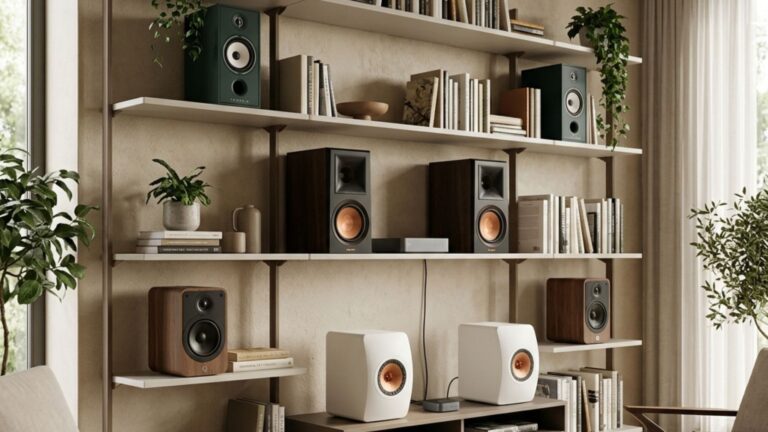
As a general rule, loudspeakers need a bit of “breathing room”. Positioning your speakers completely flush against the back wall will result in a bass boost, but at the expense of sound clarity and depth. Aim to maintain a minimum distance of 20-30 centimetres from the rear wall. If your room’s architecture forces you to place them right against the wall, choosing the right type of loudspeaker technology becomes crucial: in these scenarios, evaluating the nature of the system makes all the difference, as we analysed when looking at the flexibility and limits of different setups in our Hi-Fi setup under 1000 euros guide.
The correct height
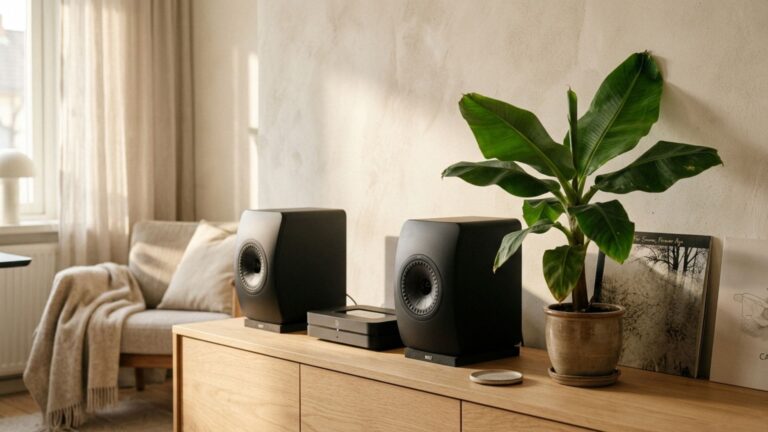
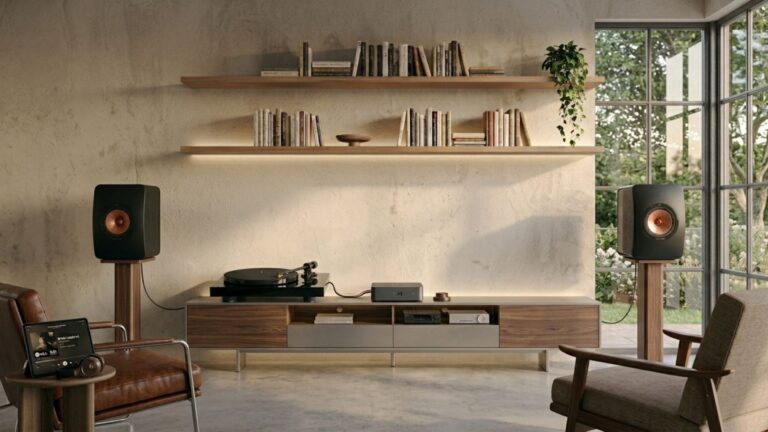
The tweeter (the small driver dedicated to high frequencies) is highly directional. To perceive every single detail in the music, the tweeters must be at ear level when you are seated in your usual listening position. If you are using bookshelf speakers placed on a low TV unit or sideboard, using small angled desktop wedges or dedicated speaker stands is essential to angle the sound upwards towards you.
Concrete examples based on room types
Every home comes with its own furnishing constraints. Here are three typical real-world scenarios and how to solve them for peak acoustic fidelity.
Scenario 1: The rectangular living room with a TV and sofa
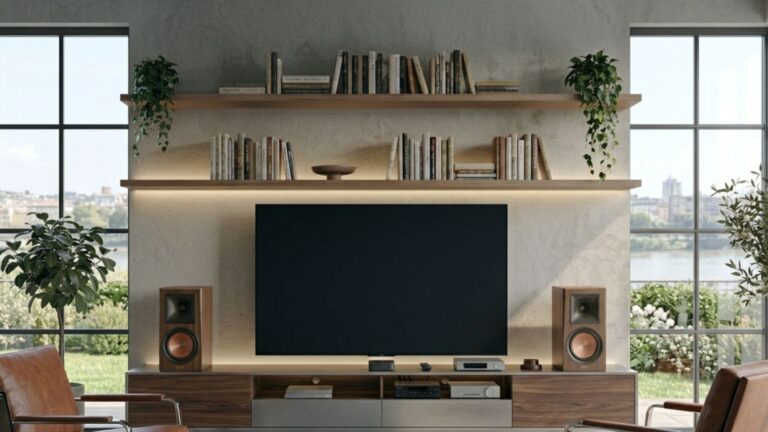
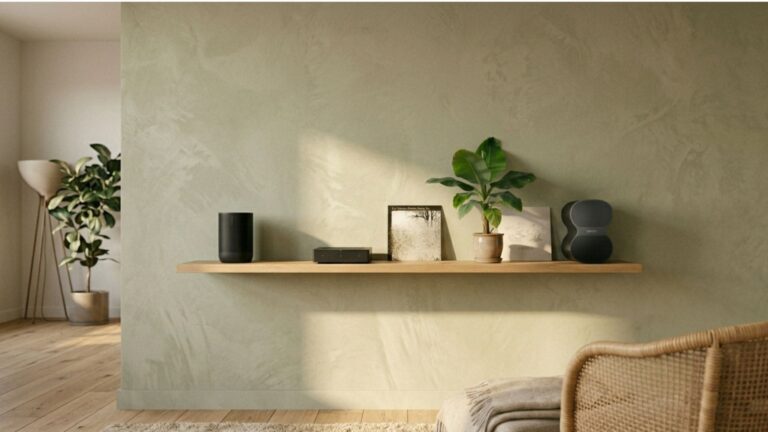
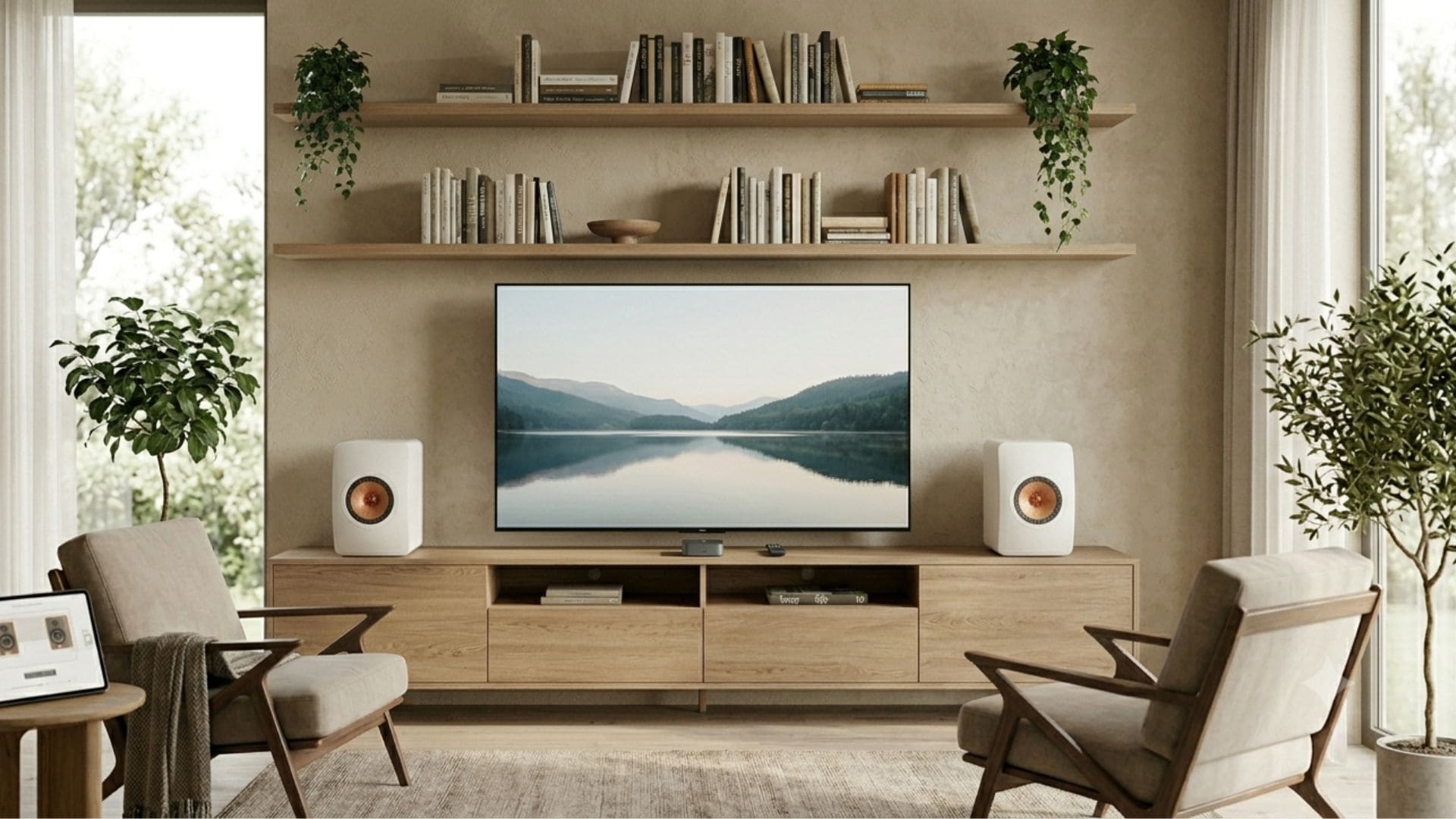
This is the most common layout. In this case, position the loudspeakers on either side of the screen, ideally on dedicated stands or on the TV unit itself (if it is wide enough). If the furniture is quite deep, pull the front of the speakers forward until they are flush with the front edge of the cabinet: this prevents the sound from bouncing off the wood surface before reaching your ears. For those looking for maximum aesthetic cleanliness in these environments without obsessing over placement geometry, compact multiroom systems offer advanced room-tuning options, a topic explored in depth in our Sonos ecosystem guide.
Scenario 2: The home office desk or study (“Nearfield” listening)
If your speakers sit on a desk on either side of your computer, you are in a nearfield listening setup. Here, room reflections matter much less because the distance to your ears is minimal (often less than a metre).
Practical tip: Angle the speakers slightly inwards (a technique called toe-in) so that both tweeters point directly at your head. Elevate the speakers off the desk surface using desktop stands or isolation pads to stop vibrations from travelling into the desk, which can muddy the midrange frequencies.
Scenario 3: The open-plan living space (living area + kitchen)
Large, open rooms are excellent because they naturally reduce boomy bass resonances, but they can suffer from a slight echo or reverb effect if the decor is too minimalist.
Practical tip: Create a virtual “listening zone” bounded by a large, short-pile rug placed between the speakers and the sofa. The rug will absorb the primary sound reflections from the floor, making vocals sound much warmer, more natural, and sharply defined.
💡 Three quick checks to get started
Before moving all your furniture around, try this quick visual and acoustic test:
- Can you clearly see the tweeters? From your listening spot, you should have a clear line of sight to the front of both speakers. If they are hidden behind house plants, cushions, or the arm of a sofa, the high frequencies will be muffled.
- Experiment with toe-in: Start with the speakers firing straight out, parallel to the back wall. Then, gradually rotate them inwards by 10, 20, or 30 degrees. You will notice the central vocal image becoming steadily sharper and more focused.
- Watch out for symmetry: If the left speaker sits twenty centimetres from a side wall and the right speaker has three metres of open space, the sound balance will drift. Try to maintain the same distance from the side walls for both loudspeakers as much as possible.
Finding the optimal placement is a journey of small adjustments. Find the right compromise between daily practicalities and your passion for great sound: your ears will thank you!