
Sonos ecosystem guide: when is integrated multiroom audio worth it?
Complete guide to the Sonos ecosystem: how it works, the benefits of multiroom audio, and an objective analysis to understand if it is the right choice for your home.
Sonos ecosystem guide: when is integrated multiroom audio worth it?
When it comes to listening to music at home in a simple, smart, and wireless way, the first name that comes to mind is almost always Sonos. The American brand literally invented the modern concept of integrated multiroom audio, transforming how we distribute sound across our rooms. But the question many people ask before investing in this ecosystem is: is it true Hi-Fi? Is it better to choose the convenience of a closed system or should you aim for a traditional open Hi-Fi setup?
In this guide, we analyze in detail how the Sonos world works, what the main models are (from Sonos Era 100 to Sonos Amp), and we help you understand if this investment truly fits your idea of cozy Hi-Fi.
How the Sonos system works: the power of the mesh network
Unlike classic speakers that connect via Bluetooth—compressing the signal and cutting frequencies—Sonos devices use your home Wi-Fi network (or create a proprietary mesh network called SonosNet). This means two fundamental things:
- Uninterrupted high-resolution audio: Music is streamed directly from streaming servers (such as Spotify, Tidal, or Apple Music) to the speakers, without passing through your phone. If you receive a call or walk away, the music does not stop.
- Perfect synchronization: You can play the exact same track in the living room, kitchen, and bedroom without a single millisecond of delay, or manage different tracks for each room directly from the official application.
The main components: which Sonos should you choose?
The ecosystem is vast, but for those looking for a quality audio setup for small or medium spaces, the main reference products are primarily three:
1. Sonos Era 100: The compact starting point
Successor to the famous Sonos One, the Sonos Era 100 is a compact speaker that fits perfectly on a shelf, the kitchen counter, or a nightstand. Thanks to its renewed acoustic architecture, it delivers stereo sound from a single body and features Trueplay tuning technology, which uses internal microphones to adapt the sound to the acoustics of the room.
Buy it on Amazon: https://amzn.to/4eohceQ
2. Sonos Era 300: The spatial audio experience
If you are looking for a more immersive listening experience, the Sonos Era 300 is designed specifically for spatial audio and Dolby Atmos. Thanks to its drivers oriented in different directions, it projects sound toward the walls and ceiling, creating a surprising three-dimensional soundstage for a single device.
Buy it on Amazon: https://amzn.to/4o7y4ty
3. Sonos Amp: The bridge to traditional Hi-Fi
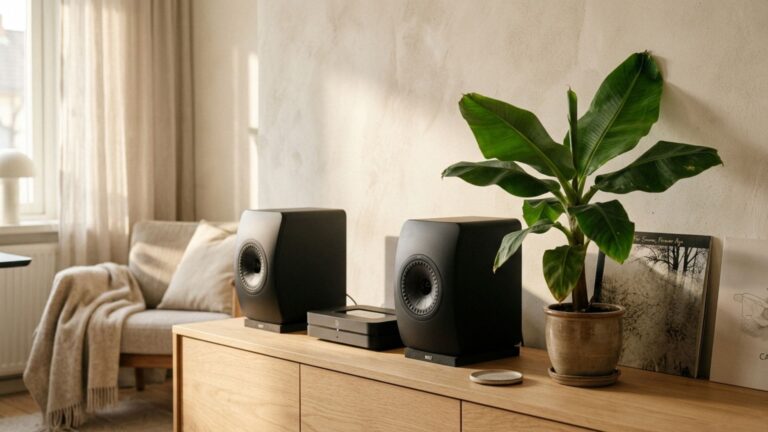
The Sonos Amp is a powerful smart integrated amplifier delivering 125W per channel. What is it for? It allows you to keep the smart and multiroom soul of Sonos, but by connecting a pair of traditional passive speakers of any brand (such as Dali, Q Acoustics, or Klipsch). It also includes an HDMI ARC input to connect your TV and an RCA input for a turntable.
The advantages of choosing Sonos
- Immediate setup and clean aesthetics: Just connect the power cable to the socket, open the app, and your system is ready in two minutes. No signal cables crossing the room, no bulky furniture.
- Flawless network stability: Sonos software architecture is among the most solid on the market. Disconnections are extremely rare and managing room groups is immediate.
- Minimal design: Clean lines and matte finishes (black or white) blend perfectly into any modern decor without being invasive.
The limitations to consider: an objective analysis
Despite its undeniable quality, Sonos is not the perfect solution for all music enthusiasts. There are some important constraints to keep in mind before purchasing:
- Total dependence on the application: The entire system lives and dies within the Sonos application. If the software has a bug (as happened with some recent updates) or if the company decides to stop supporting an old model, the user experience can suffer heavily.
- Impossibility of hardware upgrades: If you buy a Sonos Era 100 and tomorrow you want a more refined tweeter or a different amplifier, you cannot change the individual components. You will have to sell the speaker and buy the next model up.
- The cost of a “closed system”: Entering the Sonos world often means tying yourself exclusively to their products. If you want to add a subwoofer, you will have to buy the Sonos Sub (or Sub Mini), which comes with a significant cost compared to alternative solutions on the market.
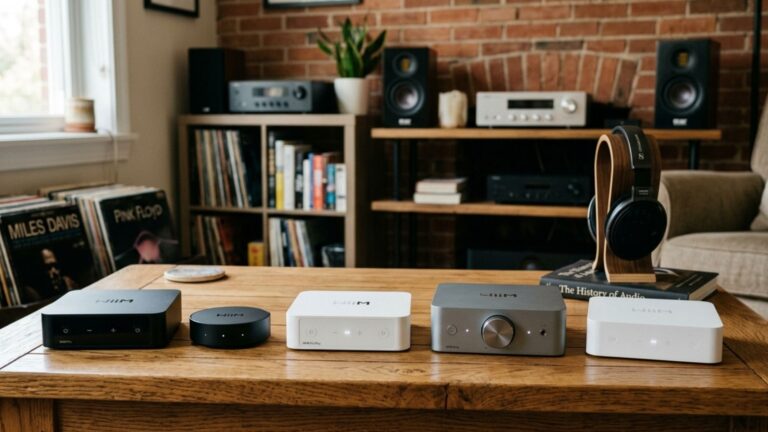
📊 Comparative table: Sonos vs Traditional Hi-Fi (e.g., WiiM ecosystem)
| Feature | Sonos Ecosystem | Open Hi-Fi (e.g., WiiM + Active Speakers) |
|---|---|---|
| Ease of installation | Maximum (Total Plug & Play) | Easy (Requires connecting 1-2 cables) |
| Component flexibility | Minimum (Proprietary closed system) | Maximum (You can change streamer or speakers freely) |
| Value for money | Medium (You pay a lot for the ecosystem and software) | High (You can optimize the budget on individual parts) |
| Real stereo soundstage | Only by pairing two identical speakers | Native (With a pair of left/right speakers) |
💡 The CozyHiFi verdict: when is it convenient to buy Sonos?
The Sonos system makes sense if your absolute priority is everyday convenience, aesthetic cleanliness, and the need to soundproof multiple rooms independently without going crazy over cables and technical configurations. If you want excellent background audio while moving around the house, or an orderly TV system, Sonos is unbeatable.
If, on the other hand, your goal is pure stereo listening performance (the classic “soundstage” where you close your eyes and can place the guitar on the right and the vocals in the center), a configuration with a dedicated streamer (like the WiiM range) and a pair of true active or passive bookshelf speakers will offer you superior vertical quality at a often lower cost. The choice is yours, and happy listening!